
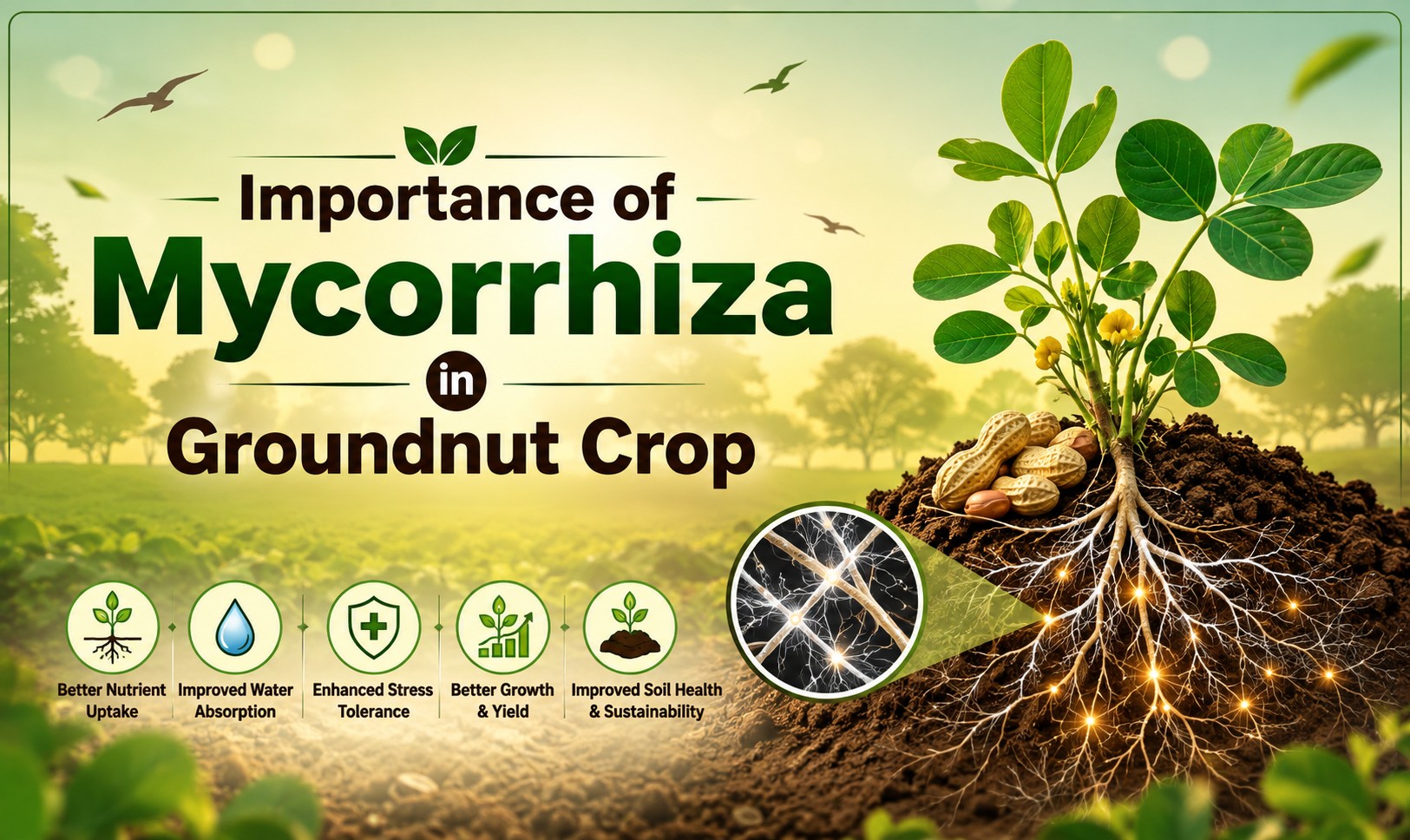
Groundnut is a nitrogen-fixing plant in its roots, and the use of mycorrhiza (especially VAM fungi) has proven to be very important for increasing yield and soil fertility. Phosphorus is extremely vital for the penetration of pegs, pod setting, and grain development in groundnut. The insoluble phosphorus present in the soil cannot be taken up directly by the plant. Mycorrhiza goes far into the soil through its long filaments and draws nutrients like phosphorus, zinc, and sulfur, making them directly available to the plant roots. (Absorption of more phosphorus and nutrients)
- Mycorrhiza forms a large network around the root, thereby increasing the root absorption surface by 50 to 100 times. Due to this, the crop can absorb moisture from deep within the soil during times of low rainfall or dry spells. This property is very helpful in saving the crop when there is irregularity in rainfall during the Kharif season. (Root spread and drought resistance)
- Mycorrhiza helps in the development of root nodules by increasing phosphorus availability, due to which Rhizobium and other beneficial bacteria fix nitrogen more effectively. (More nitrogen fixation & disease resistance)
- Mycorrhiza creates a biological protective shield around the roots and provides protection against soil-borne pathogenic fungi such as root rot and white fungus, keeping the roots healthier and stronger.
Soil Treatment (For 1 Acre): Mix 100 grams of Mica with organic manure, apply it during inter-cultivation, and provide immediate irrigation.
Irrigation Treatment (For 1 Acre): 100 grams of Mica can be mixed with water and given through drenching or along with irrigation.
Direct Effects Seen on Yield:
- The vegetative growth of the plant happens rapidly and the root foundation becomes strong.
- Groundnut pegs enter the soil easily and in higher quantities.
- The problem of empty pods decreases and grains become well-filled.
- A remarkable increase is seen in the oil percentage and weight of the grains. (Bumper yield, large grains & more oil)